What Happens to a Child’s Car Accident Settlement in Missouri
A settlement for an injured child is not handled the same way as a settlement for an adult. When a minor is hurt in a Missouri car crash, the money belongs to the child, not the parent, and Missouri law adds steps to make sure the child's interests are protected before anyone signs a release. If your son or daughter was injured in a wreck in Clay County or elsewhere in the north Kansas City metro, here is how a minor's settlement typically gets approved, who has authority to settle it, and how the funds are held until your child turns 18.
Nothing on this page is legal advice about your specific situation, and no outcome is ever guaranteed. It is a plain explanation of the process so you know what to expect.
Who can settle a claim for an injured child?
A child under 18 cannot bring a lawsuit or sign a binding settlement on their own. A parent or another adult acts on the child's behalf. In an injury claim, that adult is usually the parent, standing in as what Missouri courts call a "next friend" when a suit is filed, or serving as a conservator when the court appoints one to manage the money.
What matters for parents is that the claim is the child's, and the recovery is the child's. A parent brings the claim on the child's behalf, but a parent cannot pocket a settlement or spend it freely. Missouri builds in oversight precisely because the person settling the claim (the parent) and the person the money belongs to (the child) are not the same.
A parent may also have a separate claim of their own for the medical bills they paid for the child's care. That parental claim is distinct from the child's claim for the injury itself, and the two are often resolved together but valued separately.
Does a child's settlement need court approval?
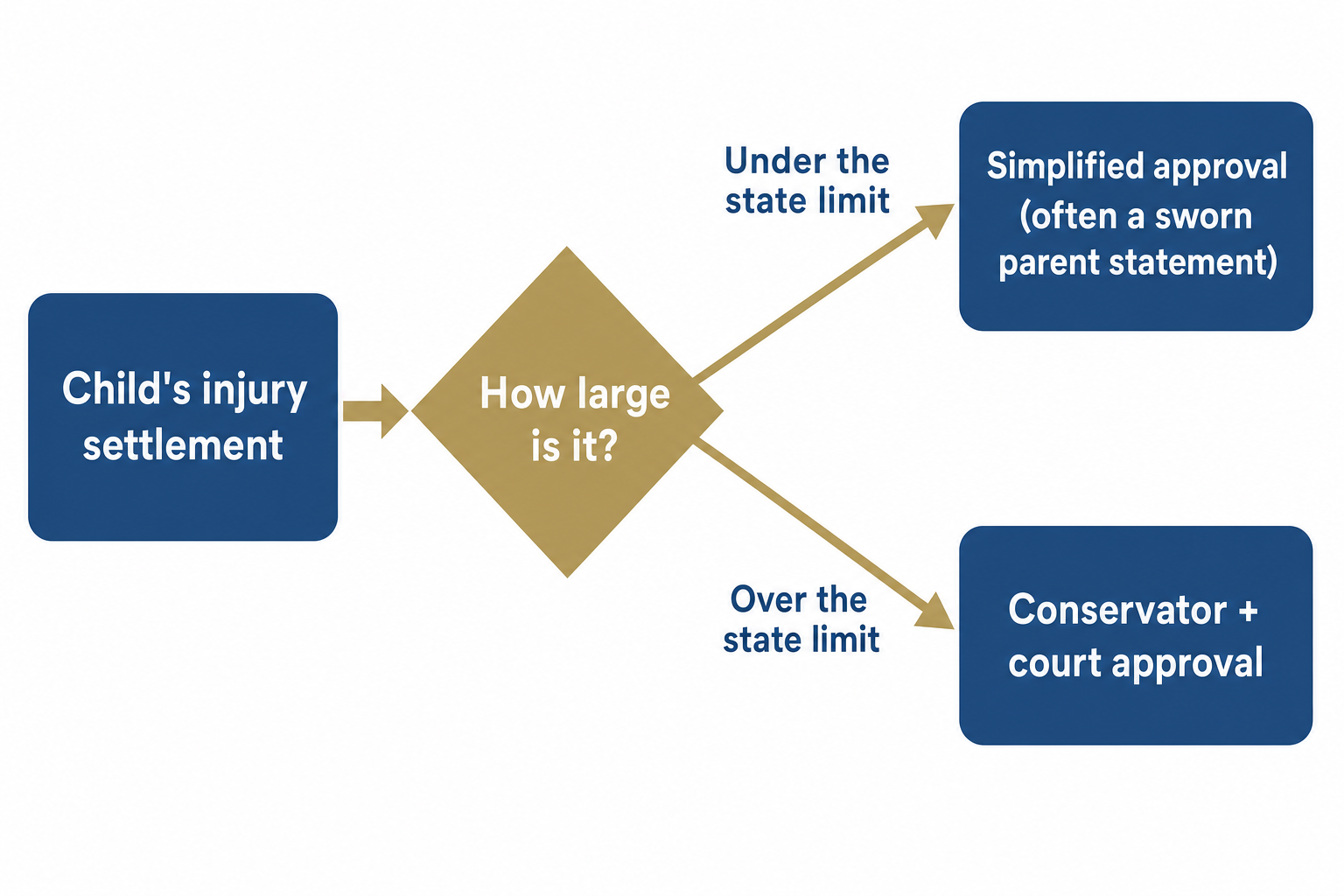
Most minor settlements in Missouri require a court to approve them before they are final. The court's job is to look at the settlement and decide whether it is fair and reasonable for the child, considering the injury, the medical bills, the strength of the liability case, and the insurance available. Once the court approves the settlement and the release, the insurer pays, and the settlement binds the child so the same claim cannot be reopened later.
There is a streamlined path for smaller settlements. Missouri allows certain minor settlements under a set dollar amount to be handled without a full conservatorship or formal court approval, often through a sworn statement by the parent. The idea is to keep modest recoveries from being swallowed by the cost and delay of a court proceeding.
Why the court gets involved at all
The approval requirement protects the child and everyone else at the table. For the child, it means a neutral judge confirms the deal is fair before the money is committed. For the insurer and the defendant, court approval is what makes the release actually binding. A parent cannot waive a child's claim on their own, so without court approval the defendant could face the risk of the child re-litigating the same injury after turning 18. Approval closes that door.
The role of a conservator, next friend, or guardian ad litem
When a minor's settlement is large enough to require formal handling, Missouri uses a few distinct roles, and they are easy to confuse.
A next friend is the adult, usually a parent, who brings the claim or lawsuit on the child's behalf. A conservator is a person the court appoints to receive and manage the child's money, with duties to the court for how that money is handled. A guardian ad litem is someone the court may appoint to independently represent the child's interests in the approval process, so the child has a voice that is separate from the parent and from the lawyers negotiating the deal.
In many cases the same parent serves as next friend and, after appointment, as conservator. In others the court appoints a guardian ad litem to review the settlement and report on whether it serves the child. Which roles are needed depends on the size of the settlement and the court handling it.
How are the settlement funds held until my child turns 18?
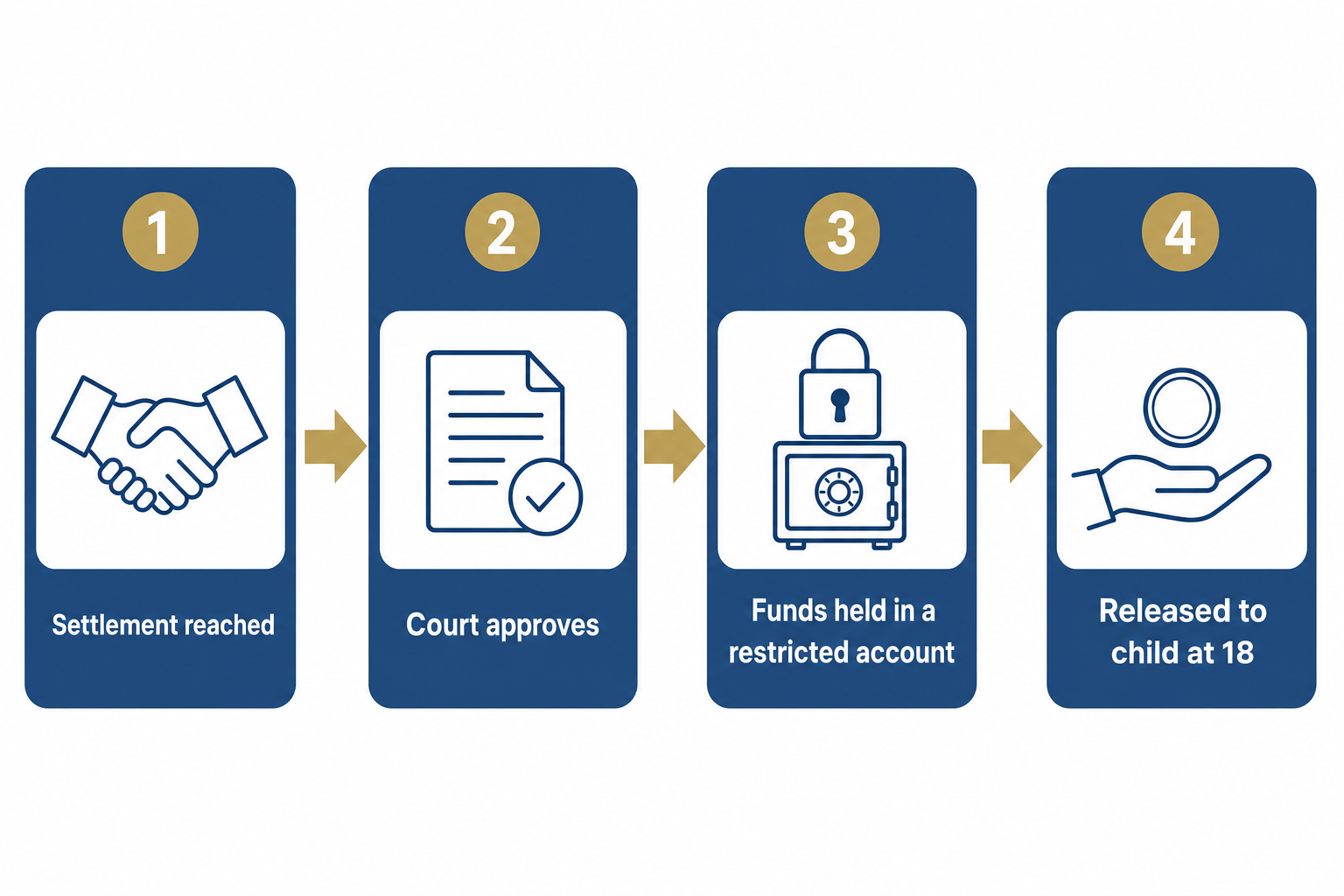
The money is protected until the child is an adult. Missouri does not let a child's settlement be handed over for a parent to spend. Instead, the funds are typically placed in a restricted account or otherwise held so they cannot be withdrawn without court permission, and they are preserved for the child.
When the child turns 18, the restriction generally ends and the now-adult child receives the funds. In some cases a court may approve using a portion of the money earlier for the child's direct benefit, such as medical care, but that usually requires asking the court first.
Families sometimes choose a structured settlement for a larger recovery, where the money is paid out over time or at set ages rather than in a single lump sum at 18. That is an option to discuss, not a requirement.
How long do I have to bring my child's claim? The statute of limitations
Missouri's general deadline to file a personal injury lawsuit is 5 years from the date of the injury under RSMo 516.120. That is the adult clock.
For an injured child, Missouri treats the deadline differently because a minor cannot be expected to file suit on their own. The state pauses that clock for a minor, so a child's deadline is not the flat 5 years an adult would face. A parent can usually bring the claim for the child well before the child turns 18, and in many families that is the right time to resolve it, while records are fresh and the injury's effect on the child is clear. The extended deadline is a protection, not a reason to wait.
What this means if your child was hurt in a crash
For most families, the practical path looks like this. The claim is pursued on the child's behalf, the medical picture and the insurance available are worked out, and a settlement is negotiated. If it is a small settlement, it may be approved through a simplified process. If it is larger, the court reviews it, a conservator or guardian ad litem may be involved, and once the judge approves it the funds are held for the child until 18.
The process is designed to protect your child, and it is routine for the courts in Clay County and across Missouri. Knowing the steps ahead of time makes it less stressful when you are already dealing with a hurt child.
If you want to understand how a settlement amount gets evaluated, our guides on what a good settlement offer looks like and how a car accident lawsuit works walk through the parts that apply to adults and children alike. For the law that governs fault in a Missouri crash, see our explainer on Missouri comparative fault, and if the at-fault driver had little or no insurance, our page on uninsured and underinsured motorist claims in Missouri explains where a child's recovery might come from.
Talk to our Liberty office
If your child was injured in a car accident in Clay County or the north Kansas City area, we are glad to walk you through the process and what it means for your family. The consultation is free, and there is no pressure to hire us. Call our Liberty office at 816-367-6937 to talk it through.
Frequently asked questions
Can a parent keep a child's car accident settlement in Missouri?
No. The settlement belongs to the child, not the parent. Missouri requires the money to be preserved for the child, usually in a restricted account or another protected form, and it is generally released to the child at 18. A parent cannot spend it freely.
Does a child's settlement have to be approved by a court in Missouri?
Most minor settlements require court approval, where a judge confirms the settlement is fair and reasonable for the child before it becomes final. Smaller settlements under a set amount may be handled through a simplified process without a full conservatorship.
Who signs the settlement for an injured child?
A parent, acting as the child's next friend, typically brings and resolves the claim, and a court-appointed conservator may be the one who formally receives and manages the funds. A guardian ad litem may also be appointed to independently review whether the settlement serves the child.
When does my child get the money?
Generally when the child turns 18 and the account restriction ends. A court can sometimes approve using part of the funds earlier for the child's direct benefit, but that usually requires court permission first. Some families use a structured settlement that pays out over time instead of a lump sum at 18.
How long do I have to file my child's injury claim in Missouri?
Missouri's general personal injury deadline is 5 years from the date of injury under RSMo 516.120, but for a child the deadline is extended by a tolling rule because the injured person is a minor.
Author Bio

Kevin A. Jones | Personal Injury Lawyer
Kevin A. Jones, founder and managing attorney of Empower Injury Law, has been practicing law since 2009. With over $25 million in jury verdicts and settlements in his first decade, Kevin has earned a reputation as a fierce advocate for his clients.
Kevin’s approach to law is rooted in his passion for helping people who have been mistreated by corporations, insurance companies, and other powerful entities.
Whether representing individuals wronged by negligent drivers or those injured on someone else’s property, Kevin is dedicated to achieving justice. His extensive experience in the courtroom ensures that clients receive strong, personalized representation that delivers results.
Practice Areas


