Invitee, Licensee, or Trespasser: Does Your Status Matter in a Missouri Premises Case?
In a Missouri premises-liability case, your legal status on the property decides the duty the owner owed you, and that duty often decides whether you have a claim at all. Missouri still sorts visitors into three classes: invitee, licensee, and trespasser. If you were hurt on someone else's property in Clay County or the north Kansas City area, understanding which class you fall into is the first step in understanding your case.
Why status matters in Missouri
A property owner (the law calls this person the possessor) does not owe every visitor the same thing. The duty owed rises or falls with the visitor's class. So the same spill, the same broken step, or the same unlit stairwell can support a claim for one visitor and not for another, depending only on why that person was there. This is different from asking whether the owner was careful. Before a jury ever weighs the owner's conduct, your status sets the standard that conduct is measured against.
The three classes of visitor in Missouri
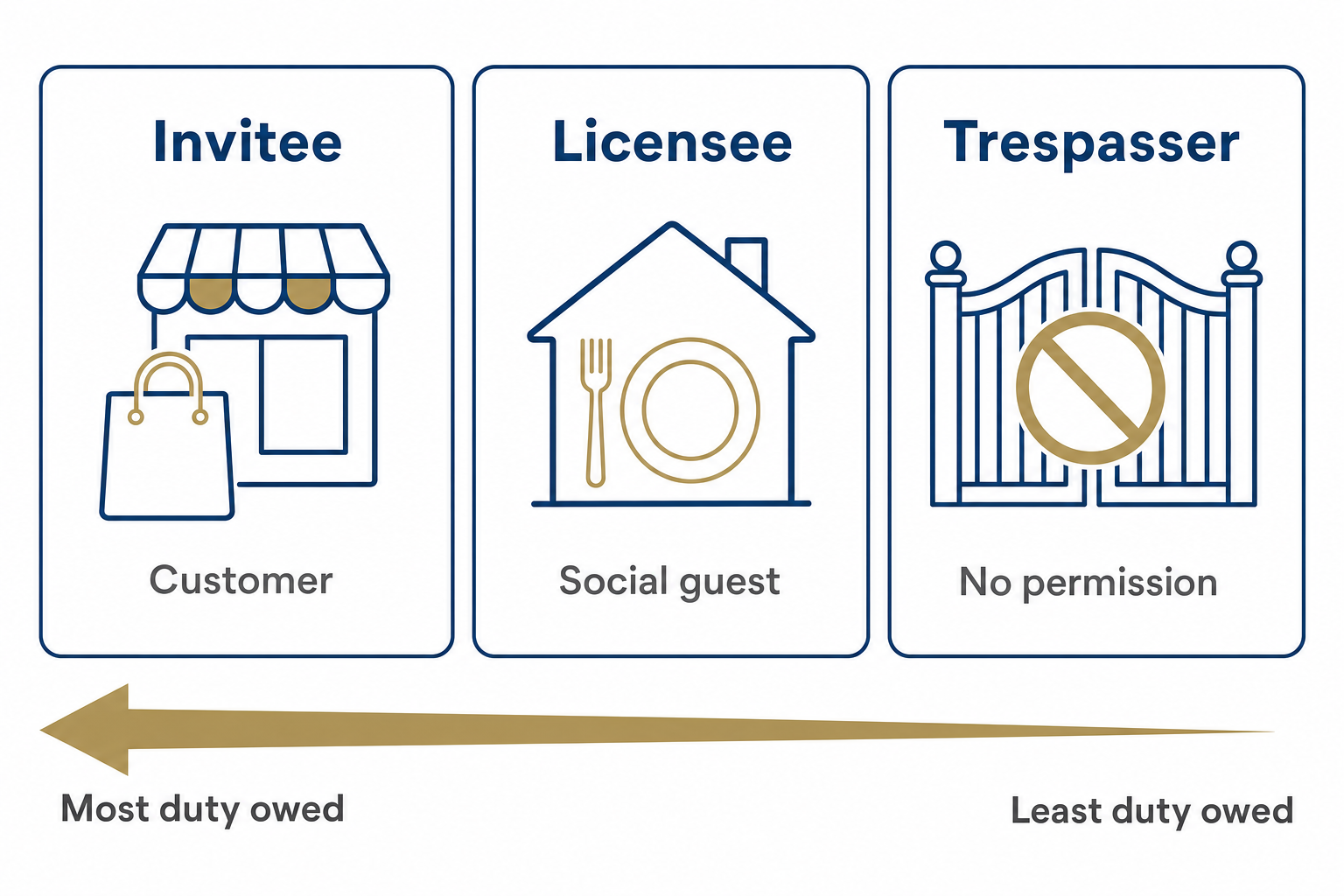
Missouri recognizes three categories, and each carries its own standard of care.
Invitee
An invitee is on the property for a purpose connected to the possessor's business or interest. Customers in a store, patrons at a restaurant, and people visiting a business open to the public are the common examples. What makes someone an invitee is a benefit to the possessor, not merely the owner's permission to be there. The Missouri Supreme Court drew that line in Claridge v. Watson Terrace Christian Church, 457 S.W.2d 785 (Mo. banc 1970): the question is whether the possessor derives a legally recognized benefit from the visitor's presence. That benefit can be potential rather than actual, so a customer who browses a store and buys nothing is still an invitee.
An invitee is owed the most. The possessor must use reasonable care to keep the premises reasonably safe, which includes inspecting for dangers the possessor does not yet know about. An owner can be responsible for a hazard it should have found through reasonable care, even if no one had reported it.
Licensee
A licensee enters with the possessor's permission but for the licensee's own purpose, with no business benefit to the possessor. The most common licensee is a social guest. If a friend invites you over for dinner and you fall on a loose stair, you are a licensee, not an invitee, because your visit served your own social purpose rather than the host's business interest.
Missouri treats social guests as licensees rather than as a separate fourth class. The Supreme Court settled that in Carter v. Kinney, 896 S.W.2d 926 (Mo. banc 1995). A church member who slipped on ice in the driveway of a home where he had come for a Bible study was a licensee, because attending the gathering benefited him, not the homeowners. In the same decision the Court kept Missouri's traditional classifications in place and declined to replace them with a single "reasonable care under the circumstances" standard.
The standard of care itself is essentially the same for both classes: reasonable care to keep the premises reasonably safe. What differs is when that duty is triggered. For a licensee, the duty arises as to conditions the possessor actually knows about, so the possessor must warn of or make safe a known danger the licensee is not likely to discover, but there is no obligation to inspect for unknown hazards on a licensee's behalf. For an invitee, the duty reaches conditions the possessor knows about or could discover through reasonable care. The practical difference is knowledge: an invitee can recover for a danger the owner should have found, while a licensee generally must show the owner already knew of it.
Trespasser
A trespasser enters without permission and without any privilege to be there. The possessor owes a trespasser the least: generally, only a duty not to injure the person through willful or wanton conduct, such as setting a trap. The possessor is usually not responsible for ordinary hazards an uninvited person stumbles into.
There are narrower rules that can change this, including situations involving children drawn onto property by a dangerous condition. Whether any of those apply depends on the facts, so a lawyer should review them rather than assume a trespass ends the matter.
How does my status affect my claim?
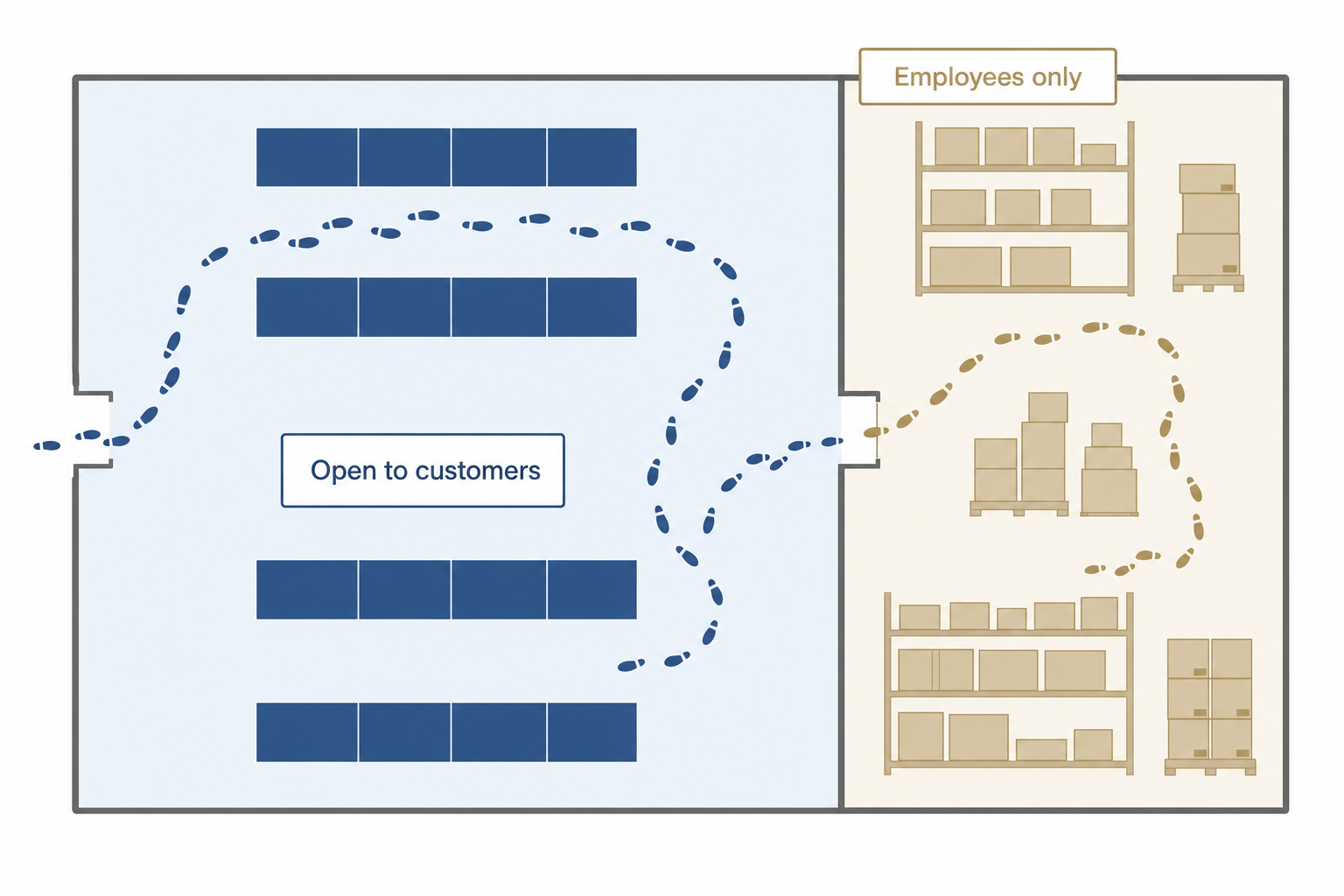
Status sets the standard, and the standard tells you what you have to prove. As an invitee, you can reach a hazard the owner should have discovered through reasonable inspection, so proof that the condition existed long enough to be found can carry the claim. As a licensee, the question usually narrows to what the owner knew, which is a harder thing to show and often turns on prior complaints, repairs, or the owner's own use of the area. As a trespasser, the bar is higher still.
Your status is not always fixed, either. A person can enter as an invitee and lose that status by going into an area that is off limits, or by staying after the business invitation has ended. Because the class controls so much, it is frequently the first thing an insurer disputes.
Does being partly at fault end my claim?
No. Missouri follows pure comparative fault, so being partly responsible for your own injury reduces your recovery by your share of fault rather than barring it. If a jury finds you 30 percent at fault for not watching where you walked, your award is reduced by that 30 percent. You can read how this works in Missouri comparative fault. An owner will often argue a hazard was open and obvious, which is best answered with the specific facts of your fall.
What about the time limit to file?
Missouri generally gives you five years to bring a personal-injury claim, which includes most premises cases. That is a general rule, and certain situations can shorten or change the practical deadline, so it is better to have your case reviewed early than to rely on the full period. For more on how premises claims work in this area, see our premises liability overview, our Liberty premises liability page, and our Kansas City premises liability page.
Frequently asked questions
Is a social guest an invitee or a licensee in Missouri?
A social guest is a licensee. Missouri does not treat social guests as invitees, because the visit serves the guest's own purpose rather than a business interest of the host. The Missouri Supreme Court confirmed this in Carter v. Kinney. The owner's duty to a social guest is to warn of or fix dangers the owner knows of and that the guest is unlikely to notice.
What is the difference between an invitee and a licensee?
The difference is benefit and the duty that follows from it. An invitee is on the property for a purpose tied to the possessor's business or interest and is owed reasonable care to keep the premises reasonably safe, including inspection for unknown hazards. A licensee is present with permission but for the licensee's own purpose and is owed protection only from dangers the possessor is aware of. In short, an invitee can recover for a hazard the owner should have found; a licensee usually must show the owner already knew of it.
What duty does a property owner owe a trespasser in Missouri?
Generally only a duty not to injure the trespasser through willful or wanton conduct. The owner usually is not responsible for ordinary hazards an uninvited person encounters. Narrower rules can apply, including when a child is drawn onto the property by a dangerous condition, so the facts matter.
Can my status change while I am on the property?
Yes. Someone can enter as an invitee and lose that status, for example by going into an employees-only area or staying after a store has closed. Because the class controls the duty owed, which status applied at the moment of injury is often the central dispute in a premises case.
Does it matter which status I had if I was partly at fault?
Your status and your own fault are separate questions. Status sets the owner's duty; your own share of fault then reduces your recovery under Missouri's pure comparative fault rule, but it does not bar the claim.
Talk through your situation
If you were hurt on someone else's property in Liberty, Clay County, or the north Kansas City area, we can look at the facts and tell you which class likely applies and what that means for your case. Consultations are free, and there is no obligation. Call 816-367-6937 or reach us through our contact page to talk it through. You can also watch our client-education videos in our video library.
This page is general information about Missouri law, not legal advice, and reading it does not create an attorney-client relationship. Which rule applies to your situation depends on its specific facts.
Author Bio

Kevin A. Jones | Personal Injury Lawyer
Kevin A. Jones, founder and managing attorney of Empower Injury Law, has been practicing law since 2009. With over $25 million in jury verdicts and settlements in his first decade, Kevin has earned a reputation as a fierce advocate for his clients.
Kevin’s approach to law is rooted in his passion for helping people who have been mistreated by corporations, insurance companies, and other powerful entities.
Whether representing individuals wronged by negligent drivers or those injured on someone else’s property, Kevin is dedicated to achieving justice. His extensive experience in the courtroom ensures that clients receive strong, personalized representation that delivers results.
Practice Areas


