Kansas PIP and No-Fault Insurance Explained
Kansas is a no-fault auto insurance state, which means that after a crash your own insurer pays your early medical bills and lost income through personal injury protection (PIP), regardless of who caused the collision. No-fault comes from the Kansas Automobile Injury Reparations Act (KAIRA), and every Kansas auto policy is required to include PIP coverage. No-fault does not mean no one is responsible, and it does not mean you can never pursue the at-fault driver. It sets who pays first, and it sets conditions you have to meet before you can sue the other driver for pain and suffering. This page explains what PIP pays, the minimum amounts Kansas requires, and when you can step outside the no-fault system. If you were hurt in a crash in Kansas and are trying to sort out PIP, our Lawrence office serves Douglas County and the surrounding area and offers a free case review at 785-367-6937.What does no-fault insurance mean in Kansas?
No-fault means that after most Kansas crashes, you turn to your own auto policy first for certain losses, no matter who was at fault. Your insurer pays those benefits through PIP, and it pays them without waiting to sort out blame. The point of the system is to get medical bills and lost wages covered quickly, rather than leaving an injured driver waiting on a liability dispute. No-fault is not the same as having no claim against the person who hit you. It changes the order of who pays and adds a threshold you must meet before you can recover certain damages from the at-fault driver. Kansas built this framework through KAIRA, codified at K.S.A. 40-3101 and the sections that follow.What is PIP (personal injury protection)?
PIP is the required first-party coverage that pays your own economic losses after a crash. First-party means it is your own policy paying you, not the other driver’s insurer. PIP is mandatory on every Kansas auto policy, and the required contents of a Kansas policy are set out in K.S.A. 40-3107. PIP covers economic losses only. It pays for things like medical treatment and lost income. It does not pay for pain and suffering or other non-economic harm, because those non-economic damages are what you may pursue from the at-fault driver once you meet the conditions described further down this page.What does PIP pay for, and how much?
Kansas sets minimum PIP benefit amounts by category in K.S.A. 40-3103. Your policy can provide more than these minimums, but not less. The required minimum benefits are:- Medical expenses: at least $4,500 per person.
- Rehabilitation expenses: at least $4,500 per person.
- Disability or loss of income: at least $900 per month, for up to one year.
- Substitution or essential-services benefits (help with tasks you can no longer do yourself, such as household work): up to $25 per day, for up to 365 days.
- Funeral and burial expenses: up to $2,000.
- Survivors’ benefits: at least $900 per month, for up to one year.
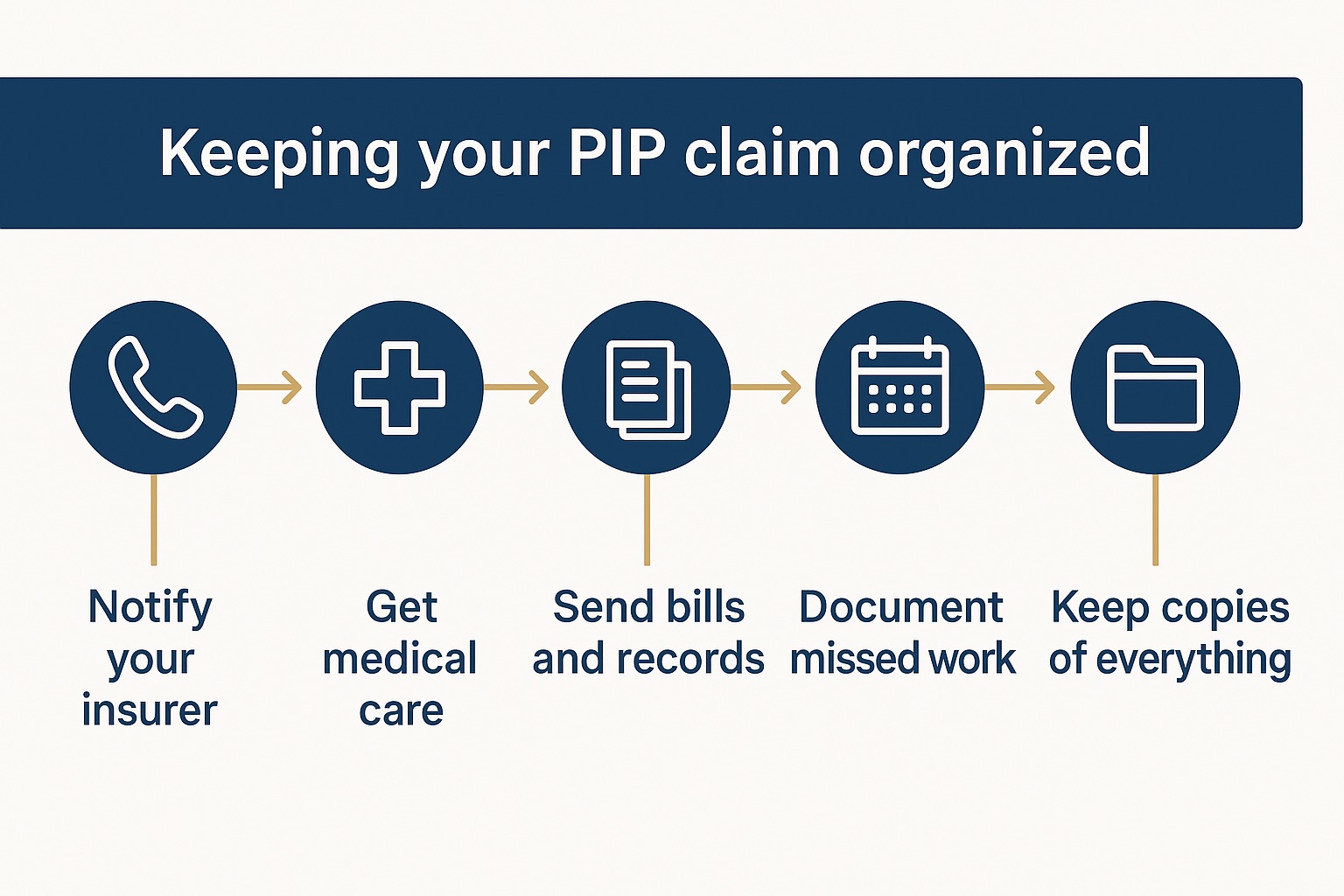
Do I file a PIP claim even if the crash was not my fault?
When can I step outside no-fault and sue the at-fault driver in Kansas?
No-fault limits your right to recover non-economic damages (pain and suffering) from the at-fault driver, but it does not eliminate it. Kansas sets a tort threshold in K.S.A. 40-3117. You can pursue the at-fault driver for pain and suffering only if your injury meets that threshold. You meet the threshold in one of two ways. The first is cost: your injury required medical treatment with a reasonable value of $2,000 or more. The statute looks at reasonable value, not just the amount billed. The second is the type of injury, whatever it cost: permanent disfigurement, a fracture of a weight-bearing bone, a compound, comminuted, displaced, or compressed fracture, loss of a body member, permanent injury within reasonable medical probability, permanent loss of a bodily function, or death. The important takeaway for an injured driver is that PIP handles your economic losses first, and a separate claim against the at-fault driver for non-economic damages becomes available only once the statutory threshold is met. Whether your injuries clear that threshold depends on your treatment and diagnosis, and it is worth looking at early, while the medical picture is still developing. If you do step outside no-fault to sue the at-fault driver, that lawsuit is a personal injury claim with its own filing deadline. In Kansas, most personal injury claims must be filed within 2 years. See our overview of the Kansas statute of limitations for personal injury claims for how that deadline works.What if the at-fault driver has no insurance or not enough?
PIP is not the same as uninsured or underinsured motorist coverage. PIP pays your own economic losses regardless of fault. Uninsured and underinsured motorist coverage (UM/UIM) is separate coverage that steps in when the at-fault driver has no liability insurance, or not enough to cover what you are owed. Both can be involved in the same crash, and they answer different questions. Because PIP and UM/UIM interact, and because a later recovery from the at-fault driver can affect PIP, it helps to look at your full coverage together. For how uninsured and underinsured motorist coverage works in Kansas, see our Kansas UM/UIM coverage overview. Kansas does not let you collect twice for the same loss. If your PIP carrier paid your medical bills or lost wages and you later recover from the at-fault driver, K.S.A. 40-3113a gives the PIP carrier a lien on that recovery for the benefits it duplicates. The lien is reduced by your own percentage of fault, if any, and the court divides the attorney fees between you and the PIP carrier in proportion. If you recover before your PIP benefits run out, the recovery is credited against future PIP payments. UM/UIM coverage works differently. PIP does not reduce your UM/UIM coverage limit, but UM/UIM will not pay a second time for losses PIP already covered.What if my insurer delays or denies my PIP benefits?
Kansas provides a remedy when a PIP insurer does not pay what it should. Under K.S.A. 40-3111, if the insurer unreasonably refuses to pay a PIP claim or unreasonably delays proper payment, the injured person may recover attorney fees, along with interest on the overdue benefits. That fee-shifting provision is meant to give insurers a reason to pay valid PIP claims on time. If your PIP benefits have been delayed or denied, keep your records, and consider getting advice before the issue drags on. You can also learn more about your auto coverage from the Kansas Insurance Department’s consumer auto page.Talk to a Kansas attorney about your PIP claim
If you were hurt in a Kansas crash and are unsure how PIP applies, what it should be paying, or whether your injuries let you pursue the at-fault driver, the practical step is to get answers early. Our Lawrence office serves Douglas County and the surrounding area, handles Kansas auto and injury claims, and offers a free case review. Call 785-367-6937, and we can walk through your coverage and your options. For more on how we help injured people in the area, see our Lawrence personal injury lawyer page. We also publish client-education videos on our YouTube channel. This page is general information about Kansas law, not legal advice, and it does not create an attorney-client relationship. How PIP amounts, thresholds, and coverages apply to you depends on the facts of your claim and the language of your policy.Frequently asked questions
Is Kansas a no-fault state?
Yes. Kansas is a no-fault auto insurance state under the Kansas Automobile Injury Reparations Act (KAIRA). After a crash, your own insurer pays your covered economic losses through personal injury protection (PIP) regardless of who was at fault. No-fault does not eliminate your ability to pursue the at-fault driver, but it sets who pays first and adds a threshold for recovering pain and suffering.What does PIP cover in Kansas?
PIP covers your own economic losses after a crash, including medical expenses, rehabilitation, lost income, essential services you can no longer perform, and funeral, burial, and survivors’ benefits if someone dies. PIP does not pay for pain and suffering; those non-economic damages are pursued from the at-fault driver once the statutory threshold is met.How much PIP coverage does Kansas require?
Kansas sets minimum PIP benefits in K.S.A. 40-3103: at least $4,500 per person for medical expenses, at least $4,500 for rehabilitation, at least $900 per month in disability or lost income for up to one year, up to $25 per day in substitution or essential-services benefits for up to 365 days, up to $2,000 for funeral and burial, and at least $900 per month in survivors’ benefits for up to one year. Your policy can provide more, but not less.Do I use my own insurance even if the other driver caused the crash?
Yes. Under Kansas no-fault, you file a PIP claim with your own insurer for your covered economic losses regardless of fault. You should not wait to see who is blamed for the crash before opening a PIP claim, because PIP is meant to cover your early medical care and lost income right away.When can I sue the at-fault driver in Kansas?
You can pursue the at-fault driver for pain and suffering only if your injury meets the tort threshold in K.S.A. 40-3117. The threshold is met when your medical treatment has a reasonable value of $2,000 or more, or when your injury is one of the serious types listed in the statute, such as a fracture of a weight-bearing bone, permanent injury, or permanent disfigurement.Can I recover attorney fees if my PIP insurer will not pay?
Possibly. Under K.S.A. 40-3111, if a PIP insurer unreasonably refuses to pay or unreasonably delays proper payment, the injured person may recover attorney fees plus interest on the overdue benefits. Keep your records and consider getting advice if your PIP benefits are being delayed or denied.Author Bio

Kevin A. Jones | Personal Injury Lawyer
Kevin A. Jones, founder and managing attorney of Empower Injury Law, has been practicing law since 2009. With over $25 million in jury verdicts and settlements in his first decade, Kevin has earned a reputation as a fierce advocate for his clients.
Kevin’s approach to law is rooted in his passion for helping people who have been mistreated by corporations, insurance companies, and other powerful entities.
Whether representing individuals wronged by negligent drivers or those injured on someone else’s property, Kevin is dedicated to achieving justice. His extensive experience in the courtroom ensures that clients receive strong, personalized representation that delivers results.
Practice Areas

Personal Injury

Motor Vehicle Accidents

Wrongful Death

Nursing Home Abuse

Premises Liability

Insurance Claims