Hurt in a Kansas Crash but You Live in Missouri? Which State’s Law Applies
If you were in a car accident in Kansas but live in Missouri, Kansas law generally governs your injury claim, because the crash happened in Kansas. That is the short answer, and for most Lawrence-area commuters it is the one that matters. Where you live, where your car is registered, and where your insurance was written do not change the basic rule that the law of the place of the crash controls how fault and damages are decided. We handle these cross-border claims from our Lawrence, Kansas office, and this page explains what Kansas law means for your claim and why it differs from what you may have read on a Missouri firm's website.
This comes up constantly around Douglas County. People live in the Kansas City metro on the Missouri side, commute west on I-70 or K-10 for work or school, and get hit in Lawrence, Lenexa, or somewhere in eastern Kansas. Their instinct is to read up on Missouri law because that is home. For a Kansas crash, that is the wrong book.
Why the state where the crash happened usually controls
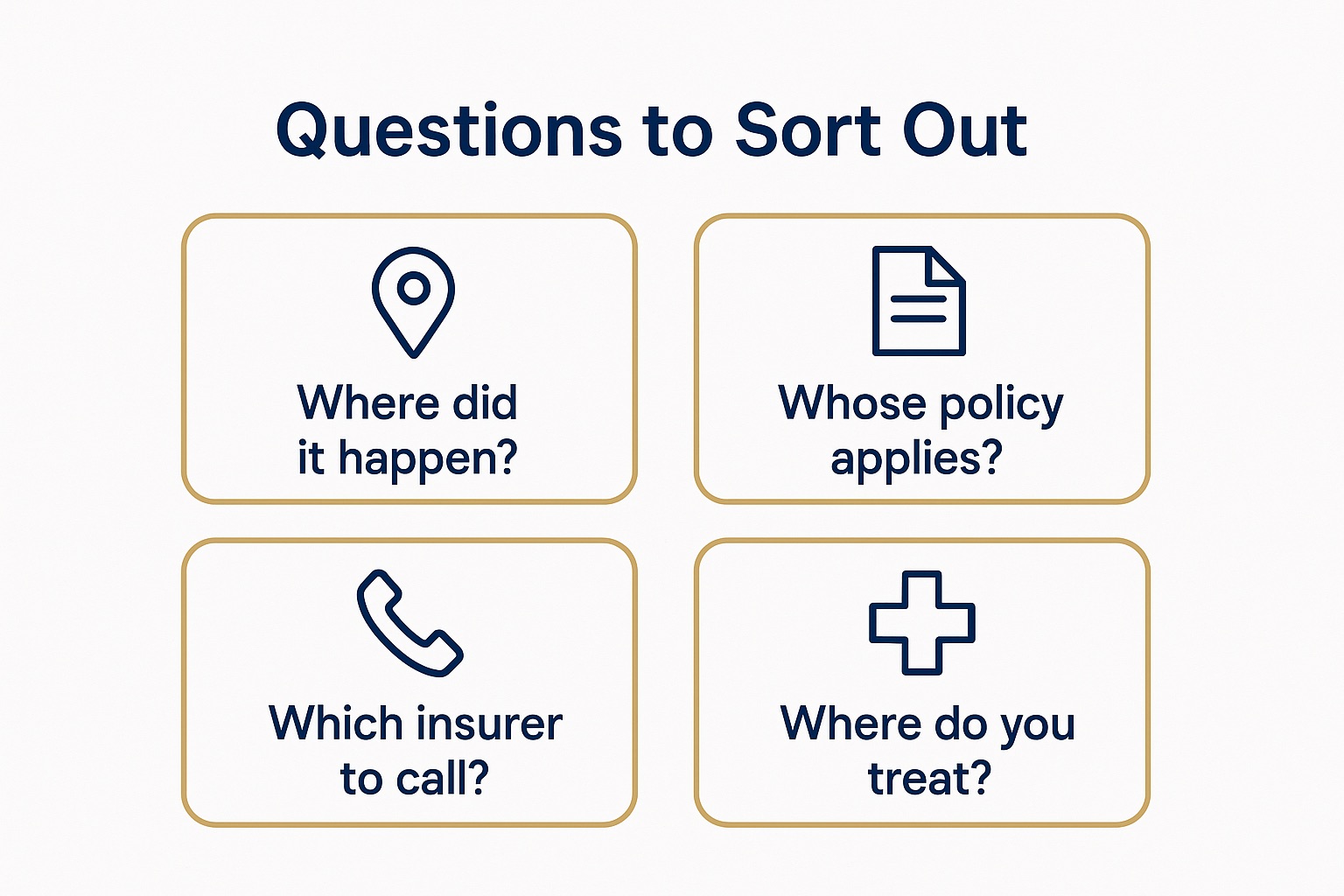
In injury cases, courts generally apply the substantive law of the state where the injury occurred. That is the traditional rule, often called lex loci delicti (the law of the place of the wrong). Under that rule, a crash on a Kansas road is governed by Kansas substantive law regardless of the driver's home state. Missouri residency, a Missouri license plate, and a Missouri auto policy do not move the claim into Missouri law.
The place where you actually file suit is a separate question from which state's law applies. If a case is filed in a Missouri court, that court does not automatically apply Missouri law. It runs a choice-of-law analysis, and Missouri's courts weigh which state has the most significant relationship to the accident and the parties. For a crash that happened in Kansas, that analysis commonly points back to Kansas substantive law.
The practical takeaway does not change while that detail is confirmed: if your crash happened in Kansas, build your claim on Kansas rules. The differences between the two states are not cosmetic. They can decide whether you recover at all, how much, and how long you have to act.
Kansas vs. Missouri at a glance
Here is how the three rules that matter most line up. Read the Kansas column; the Missouri column is here only so you can see why it matters which law applies.
| Issue | Kansas (your crash) | Missouri (contrast only) |
|---|---|---|
| Fault system | Modified comparative fault. Your recovery is reduced by your share of fault and is barred entirely if you are 50 percent or more at fault. | Pure comparative fault. You can recover even if you are mostly at fault, reduced by your percentage. |
| Personal-injury statute of limitations | 2 years from the date of the crash (with limited exceptions). | 5 years. |
| PIP / no-fault | Yes. Kansas is a no-fault state. Your own PIP coverage pays initial medical and wage benefits regardless of who caused the crash. | No. Missouri has no PIP / no-fault system. |
The gap in the first row is the one that surprises people most, so it is worth walking through.
Kansas fault rules: the 50 percent bar
Kansas uses modified comparative fault under K.S.A. 60-258a. Your damages are reduced in proportion to your own share of fault, and if you are found 50 percent or more at fault, you recover nothing. So if a jury puts $100,000 of damages on the table and finds you 20 percent at fault, you recover $80,000. If it finds you 50 percent at fault, you recover zero.
Missouri works differently. It follows pure comparative fault, which traces to the Missouri Supreme Court's decision in Gustafson v. Benda, not to a comparative-fault statute. Under that rule a Missouri plaintiff can recover even when mostly at fault, with the award cut by their percentage. A driver who is 70 percent at fault still recovers 30 percent of the damages.
That difference is not academic for a close-call crash. The same facts that leave you with a reduced-but-real recovery under Missouri's pure rule can leave you with nothing under Kansas's 50 percent bar. When the crash happened in Kansas, the Kansas rule is the one that applies, which is exactly why how fault gets apportioned deserves careful attention from the start. You can read more about how fault is divided in a Kansas case on our Kansas comparative fault page.
The deadline is shorter in Kansas
Kansas gives you 2 years from the date of the crash to file a personal-injury lawsuit under K.S.A. 60-513. There is a discovery rule for injuries that are not reasonably apparent right away, and an outer limit (a 10-year statute of repose) that caps how long the discovery rule can extend things. Claims against a government entity carry their own, much shorter notice requirements.
This is a trap for Missouri residents, because Missouri's personal-injury deadline is 5 years under RSMo 516.120. If you assume the Missouri clock applies to your Kansas crash, you can let the Kansas deadline pass while you still think you have years left. For a Kansas crash, plan around the 2-year Kansas deadline. We cover the Kansas timeline, the discovery rule, and the government-claim notice in more detail on our Kansas statute of limitations for personal injury page.
Kansas is a no-fault / PIP state. Missouri is not
Kansas is a no-fault state under the Kansas Automobile Injury Reparations Act, K.S.A. 40-3103. Every Kansas auto policy includes personal injury protection (PIP), and your own PIP coverage pays your initial medical bills and a portion of lost wages regardless of who caused the crash. You turn to your own insurer first for those benefits, and you can still pursue the at-fault driver for the rest of your damages when the injury is serious enough to step outside the no-fault system.
Missouri has no PIP or no-fault system at all. A Missouri driver's medical bills are handled through health insurance, optional medical-payments coverage, or a claim against the at-fault driver, not through a mandatory PIP benefit.
This matters for a Missouri resident hurt in Kansas because the coverage that applies is not only about where you live. Whether PIP is available, and how it interacts with your own policy and the at-fault driver's coverage, depends on the policy and the facts. Keep the PIP details for a conversation about your specific coverage; the point here is simply that Kansas builds in a first-payment layer that Missouri does not.
What this means for a Lawrence-area commuter
Put the three rules together and the picture is clear. A Kansas crash runs on Kansas rules: a 50 percent fault bar, a 2-year filing deadline, and a PIP-first coverage structure. A Missouri resident who treats the claim as a Missouri matter risks misjudging all three.
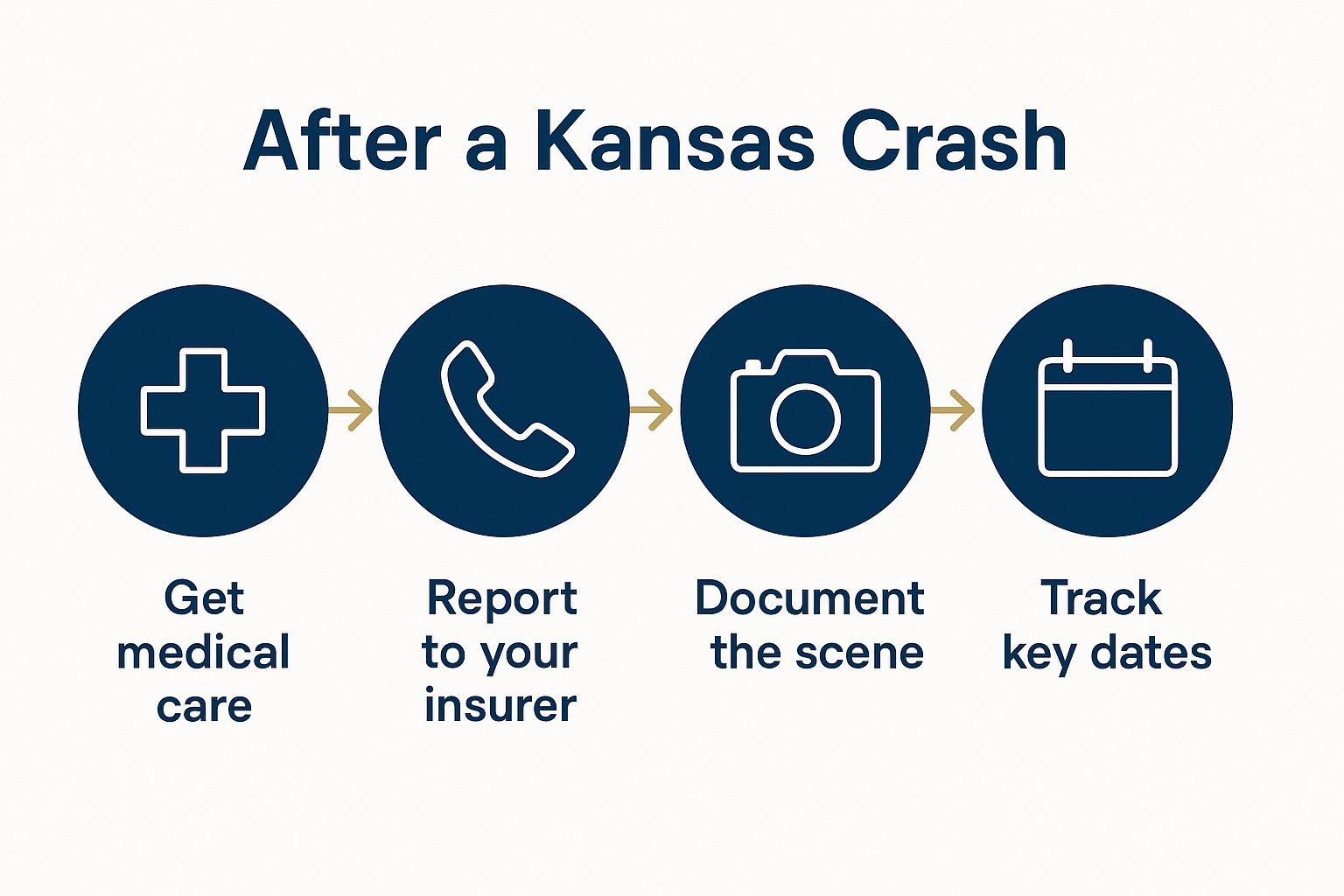
A few practical steps help in the window right after a Kansas crash:
- Get medical care and keep the records. Your Kansas PIP coverage is there to pay for the initial treatment regardless of fault, so do not delay care over worries about who pays.
- Report the crash to your own insurer promptly, and be careful about recorded statements to the other driver's insurer.
- Document the scene, the other vehicle, and any witnesses. Because Kansas bars recovery at 50 percent fault, how fault gets divided is not a detail you want left to the other side's version.
- Calendar the 2-year Kansas deadline, not the 5-year Missouri one.
Nothing on this page is legal advice about your specific crash, and no result is guaranteed. The right analysis depends on the facts, the policies involved, and where any suit is filed.
Frequently asked questions
I live in Missouri but my accident was in Kansas. Which state's law applies?
Kansas law generally applies, because the crash happened in Kansas. Courts typically apply the law of the state where the injury occurred, so your Missouri residency, plates, and insurance do not move the claim into Missouri law. If a suit is filed in a Missouri court, that court runs a choice-of-law analysis that for a Kansas crash commonly points back to Kansas substantive law.
Does my Missouri car insurance still cover a crash in Kansas?
Yes. Your Missouri auto policy follows you across state lines and still responds to a crash in Kansas. Which coverages apply, and how they interact with Kansas no-fault rules, depends on your specific policy. Report the crash to your own insurer promptly and have someone review your coverages.
How long do I have to file after a Kansas crash?
Generally 2 years from the date of the crash under K.S.A. 60-513, with a limited discovery rule and a 10-year outer limit. Claims against a government entity require much earlier notice. This is shorter than Missouri's 5-year deadline, so do not assume the Missouri clock applies to a Kansas crash.
Can I still recover if I was partly at fault in Kansas?
Yes, as long as you are less than 50 percent at fault. Kansas uses modified comparative fault under K.S.A. 60-258a: your recovery is reduced by your share of fault, and it is barred entirely once your share reaches 50 percent. Missouri's pure comparative fault rule has no such bar, which is one more reason it matters that a Kansas crash is governed by Kansas law.
Where should I file, in Kansas or Missouri?
That depends on the facts, including where the parties live and where the defendant can be sued. Even when a case is filed in Missouri, the court may apply Kansas substantive law to a Kansas crash. Which court to use is a strategic decision worth discussing before you file.
Talk to a Lawrence attorney about your Kansas crash
If you live in Missouri and were hurt in a crash in Kansas, we can walk you through how Kansas law applies to your claim and what to do next. The consultation is free, and there is no pressure to hire us. Call our Lawrence, Kansas office at 785-367-6937, or reach out through our Lawrence personal injury lawyer page. If a car or truck crash is the issue, our Lawrence motor vehicle accident lawyer page covers how we handle these cases in Douglas County. You can also find short, plain-language explainers on our YouTube channel.
Author Bio

Kevin A. Jones | Personal Injury Lawyer
Kevin A. Jones, founder and managing attorney of Empower Injury Law, has been practicing law since 2009. With over $25 million in jury verdicts and settlements in his first decade, Kevin has earned a reputation as a fierce advocate for his clients.
Kevin’s approach to law is rooted in his passion for helping people who have been mistreated by corporations, insurance companies, and other powerful entities.
Whether representing individuals wronged by negligent drivers or those injured on someone else’s property, Kevin is dedicated to achieving justice. His extensive experience in the courtroom ensures that clients receive strong, personalized representation that delivers results.
Practice Areas


