Kansas Comparative Fault and the 50% Bar Explained
If you were in a car accident in Lawrence or elsewhere in Douglas County and someone has told you that you were partly at fault, you can usually still recover money in Kansas, as long as your share of the fault stays below a certain line. Kansas uses a system called modified comparative fault. Under it, you can recover damages if your fault is less than the fault of the driver or drivers you are making a claim against, and your recovery is reduced by your own percentage. If your share reaches the cutoff, often described as the 50% bar, you recover nothing. For a Lawrence driver, a disputed case often comes down to which side of that line the evidence puts you on.
This is general information about Kansas law, not legal advice about your specific situation. How fault gets assigned in a real case depends on the evidence.
What is comparative fault in Kansas?
Comparative fault is the method a court or jury uses to divide responsibility for an accident among everyone involved, including you. Instead of asking only whether the other driver was negligent, Kansas asks what percentage of the total fault belongs to each person. Those percentages then control who can recover and how much.
Kansas follows this approach by statute. The rule is set out in K.S.A. 60-258a, the Kansas comparative negligence statute. It replaced the older, much harsher rule of contributory negligence, under which a plaintiff who was even 1% at fault could be barred from recovering anything at all. Kansas moved away from that in the 1970s.
Not every state does this the same way. Some states, including Missouri, use what is called pure comparative fault, where an injured person can recover a reduced amount no matter how high their own percentage of fault climbs. Kansas is different. Kansas caps recovery at a threshold.
Is Kansas a modified comparative fault state?
Yes. Kansas is a modified comparative fault state. That label means:
- Your damages are reduced in proportion to your own percentage of fault.
- There is a ceiling on your fault. Once you reach it, you recover nothing, even for the share of the harm someone else caused.
That ceiling is what people mean when they talk about the 50% bar. The statute itself frames it in terms of whether your negligence was "less than the causal negligence of the party or parties against whom a claim is made." In everyday terms, that is usually described as being under 50% at fault.
How the Kansas 50% bar works
The difference between being found 49% at fault and 50% at fault is not a small adjustment to your recovery. It can be the difference between a reduced recovery and no recovery at all. Because the stakes turn on a single percentage point, how fault gets argued and supported with evidence is often the most important part of a disputed Kansas accident case.
An exact 50/50 split is barred: you recover only if your share of the fault is under 50%.
How your fault percentage reduces what you recover
The arithmetic is straightforward. Suppose a jury finds your total damages are $100,000 and assigns you 20% of the fault. Your recovery is reduced by that 20%, leaving $80,000. If instead you were found 40% at fault, the same $100,000 in damages would be reduced to $60,000. If you were found 50% or more at fault, you would recover nothing under the bar described above.
These numbers show the math, not a prediction.
How is fault decided when more than one driver is involved?
In a case with more than one defendant, Kansas compares your fault against the fault of the drivers or parties you are making a claim against, taken together. The statute speaks of "the party or parties against whom a claim is made," which is why the comparison in a multi-car pileup is done against the combined fault of those defendants rather than measured one defendant at a time.
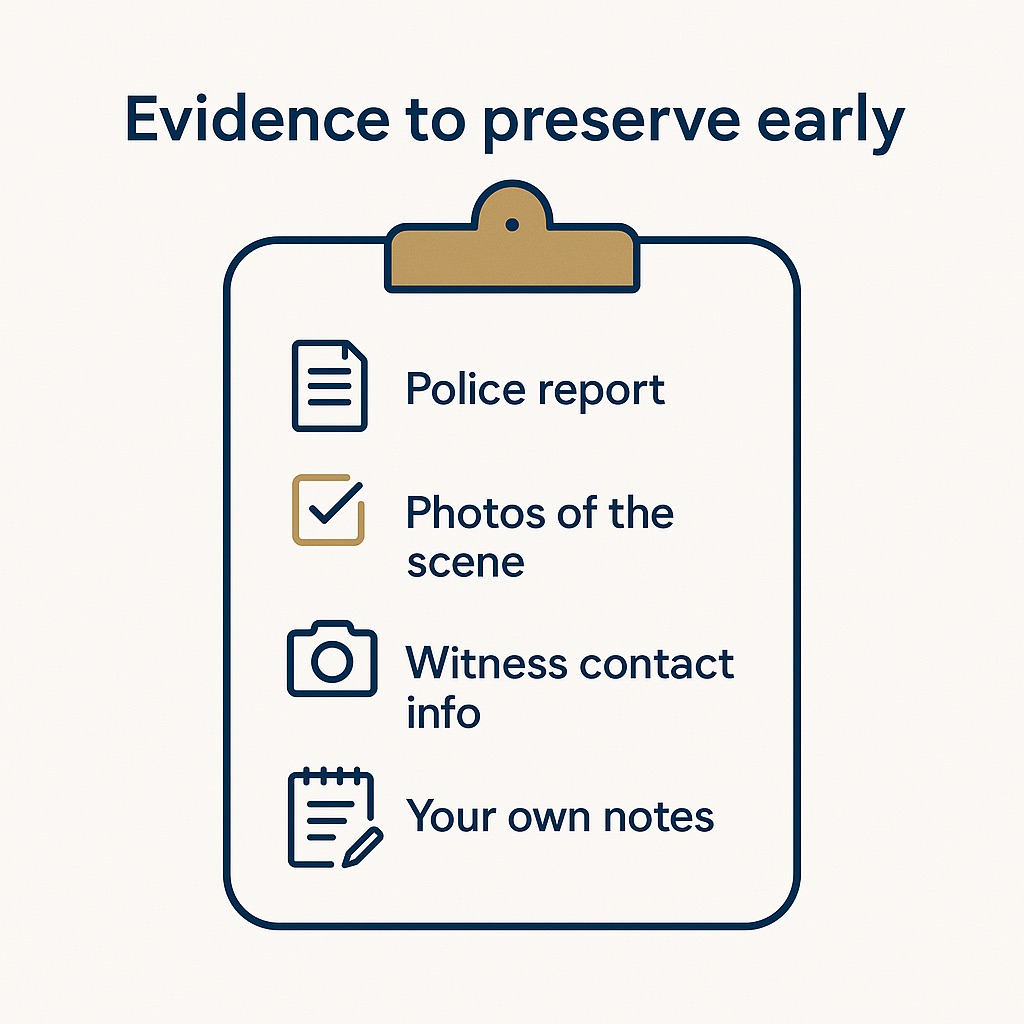
In practice, insurers and their lawyers often try to push more of the fault onto the injured driver, because moving your share up toward the line reduces what they owe and, if they can get you to the line, eliminates it. That is one reason careful documentation of a crash, including the police report, photos, and witness information, matters from the very first days.
What kinds of things can raise a driver's fault percentage?
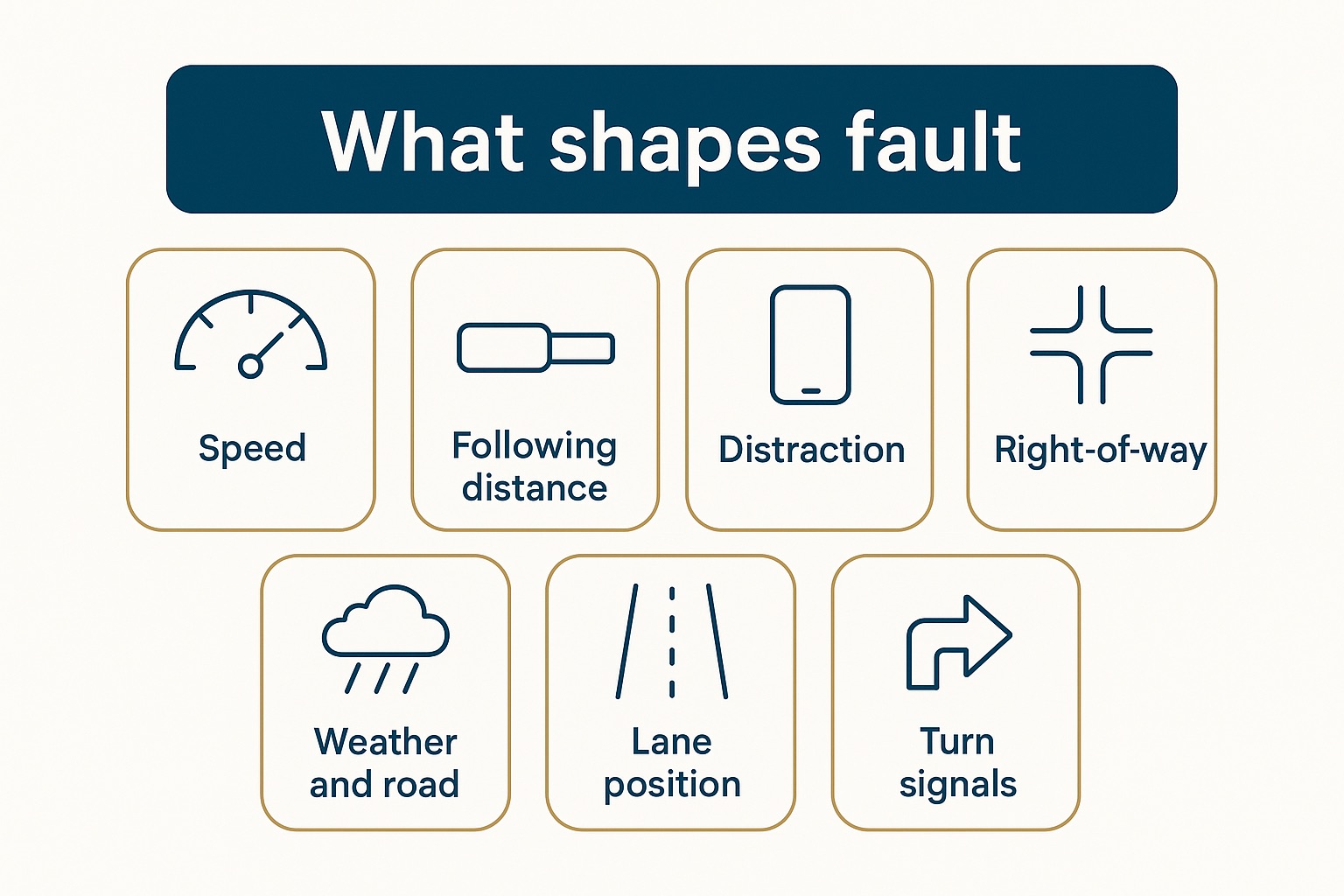
Fault percentages come from the facts of the crash: speed, following distance, whether either driver was distracted, right-of-way at an intersection, turn signals, lane position, and whether conditions like weather or road hazards played a role. No single factor sets a fixed percentage; an adjuster or jury weighs the whole picture.
Because these are judgment calls, two people can look at the same crash and assign fault differently. That is why the evidence you gather and preserve can move your percentage in a meaningful direction.
Why the Kansas rule matters for your claim
Understanding where your case sits relative to the 50% line early on helps you make informed decisions about how to handle the claim, what evidence to preserve, and whether an insurer's fault position is reasonable.
You can find short, plain-language explanations of Kansas accident topics on our YouTube channel as a general resource.
For related Kansas topics, see our overview of Kansas uninsured and underinsured motorist coverage (for when the other driver has no insurance or not enough), our Lawrence car accident page, and our guide to the Kansas statute of limitations for personal injury, which sets the deadline to bring a claim.
Frequently asked questions
Can I still recover if the accident was partly my fault in Kansas?
Usually yes, as long as your share of the fault is below the threshold in K.S.A. 60-258a. Your recovery is then reduced by your own percentage of fault. If your share reaches the cutoff, commonly described as 50%, the claim is barred and you recover nothing.
What is the 50% bar in a Kansas car accident case?
The 50% bar is the point at which a partly-at-fault driver stops being able to recover. Below it, you recover a reduced amount. At or above it, you recover nothing. The bar comes from the modified comparative fault rule in Kansas.
How is Kansas different from Missouri on comparative fault?
Missouri uses pure comparative fault, which lets an injured person recover a reduced amount regardless of how high their own fault percentage is. Kansas uses modified comparative fault with a threshold that cuts off recovery.
Who decides my percentage of fault?
In a lawsuit, the jury assigns the percentages (or the judge does in a trial without a jury), based on the evidence. Before any lawsuit, insurance adjusters take their own position on fault during the claim, and that position can be negotiated and disputed.
Does being partly at fault change how long I have to file?
No. Comparative fault affects how much you can recover, not your filing deadline. Kansas sets separate time limits to bring a claim, so check the applicable deadline early.
The insurer says I was more than half at fault. What can I do?
An insurer's fault position is not the final word. Fault percentages are judgment calls built from the evidence, and they can be challenged. Gathering the police report, photos, and witness information, and having someone review the insurer's reasoning, can matter, especially when your assigned share is near the line.
Talk through your Kansas accident
If you were injured in a crash in Lawrence or elsewhere in Douglas County and you have been told you were partly at fault, you can talk it through with our Lawrence office. A consultation is free, and there is no pressure to hire anyone. Call 785-367-6937 to go over where your case may sit relative to the 50% line and what your options are.
Author Bio

Kevin A. Jones | Personal Injury Lawyer
Kevin A. Jones, founder and managing attorney of Empower Injury Law, has been practicing law since 2009. With over $25 million in jury verdicts and settlements in his first decade, Kevin has earned a reputation as a fierce advocate for his clients.
Kevin’s approach to law is rooted in his passion for helping people who have been mistreated by corporations, insurance companies, and other powerful entities.
Whether representing individuals wronged by negligent drivers or those injured on someone else’s property, Kevin is dedicated to achieving justice. His extensive experience in the courtroom ensures that clients receive strong, personalized representation that delivers results.
Practice Areas


